Updated November 2026: the 1H 2026 release and the Autonomous HCM assistants SAP announced at Sapphire, checked against SAP’s own release notes.
SAP SuccessFactors AI capabilities in 2026 run through Joule, SAP’s AI assistant. It answers HR questions, explains learning content and, more and more, runs whole HR processes: Joule Assistants coordinate specialised Joule Agents that prepare payroll, guide recruiters, support succession planning and nudge people to finish required training. The 1H 2026 release (April 2026) added a connected network of agents across recruiting, workforce administration, payroll, learning, performance and talent development. At SAP Sapphire in May 2026, SAP announced Autonomous HCM, with Joule Assistants for payroll, core HR, time, recruiting, onboarding, HR service and workforce upskilling.
SAP SuccessFactors AI capabilities in 2026 at a glance
This is what SAP has shipped or announced for SuccessFactors, by HR area. Each row links back to SAP’s own release material in the sources at the end of this section.
| HR area | AI capability | What it does |
|---|---|---|
| Payroll and time | Payroll Assistant, with the Core HR and Time Assistants | Coordinates several Joule Agents to prepare payroll runs, flags issues early and guides administrators to faster fixes; the Core HR and Time Assistants keep employee data and time and attendance accurate. |
| HR service | HR Service Assistant | Answers common HR questions right away and points employees to their next step, which takes load off the HR service center. |
| Recruiting and onboarding | Recruiting and Onboarding Assistants, SmartRecruiters integration | Supports hiring from candidate matching to interview coordination with real-time guidance for recruiters and hiring managers, then takes over once an offer is accepted to help the new hire settle in. |
| Performance and goals | Goal Creation and Goal Progress Agents | New agents for creating goals and tracking goal progress in SAP SuccessFactors Performance & Goals (1H 2026 release). |
| Succession and careers | Succession Planning and Career Development Agents | Automate succession planning, help managers spot and develop future leaders, and use AI insights to highlight career paths so growth is clearer for employees. |
| Learning | Intelligent Q&A, Learning Compliance Agent | Gives employees instant, context-aware answers from your own learning content with links back to the source; Joule monitors compliance status and nudges people to finish required training on time. |
| Upskilling | Workforce Upskilling Assistant | Delivers personalised learning where work happens, coordinating agents for content creation, adaptive micro-learning and reinforcement, and helps identify critical skill gaps. |
| Employment guidance | Workforce knowledge network in Joule | Brings expert-backed global employment guidance and research into the flow of work, so HR teams don’t leave their workflow to look things up. |
How do Joule Assistants and Joule Agents work together in SuccessFactors?
Think of three layers. Joule Agents do one specific job, such as checking a payroll run or drafting a goal. Joule Assistants coordinate several agents to finish an end-to-end process, like a payroll cycle or onboarding a new hire. Joule Work is the front door: you describe what you need and it picks the right assistant. SAP says agents act within existing authorizations and keep audit trails, and that with Joule Studio companies can build their own agents or extend SAP’s standard ones with their own instructions.
On availability: SAP began general availability of its new assistants, agents, Joule Studio and Joule Work in October 2026, offered as SAP-managed products through the SAP for Me portal. SAP also says the Autonomous HCM assistants are designed for all of its deployment models, including SAP Cloud ERP Private. Check with your SAP account team which ones your contract includes before you plan a rollout.
Where should HR teams start with SuccessFactors AI?
- Start with high-volume, rule-heavy work. HR service questions, pay questions and learning compliance have clear rules and lots of repetition, so the time saved is easy to measure.
- Fix the data first. Agents act on what is in Employee Central. Duplicate records, missing job data or outdated org structures turn into wrong answers at scale.
- Decide who approves what. Write down which agent actions run automatically and which need a person to approve, before go-live rather than after the first mistake.
- Pilot one assistant and measure it. Track one number, such as tickets per week or hours per payroll cycle, for a month before and after. Scale only what moves it.
The rest of this guide covers the AI foundations SuccessFactors has built since 2024, area by area.
Sources for the 2026 update: SAP News, SAP SuccessFactors 1H 2026 Release (Apr 13, 2026); SAP News, SAP SuccessFactors Innovations Define a New Era of Autonomous HCM (May 14, 2026); SAP, Talent Management in the 1H 2026 Release; SAP Community, Agentic AI in SAP SuccessFactors Learning; SAP News, AI Release Highlights Q3 2026; CIO.com, Oct 7, 2026.
Introduction to SAP SuccessFactors AI
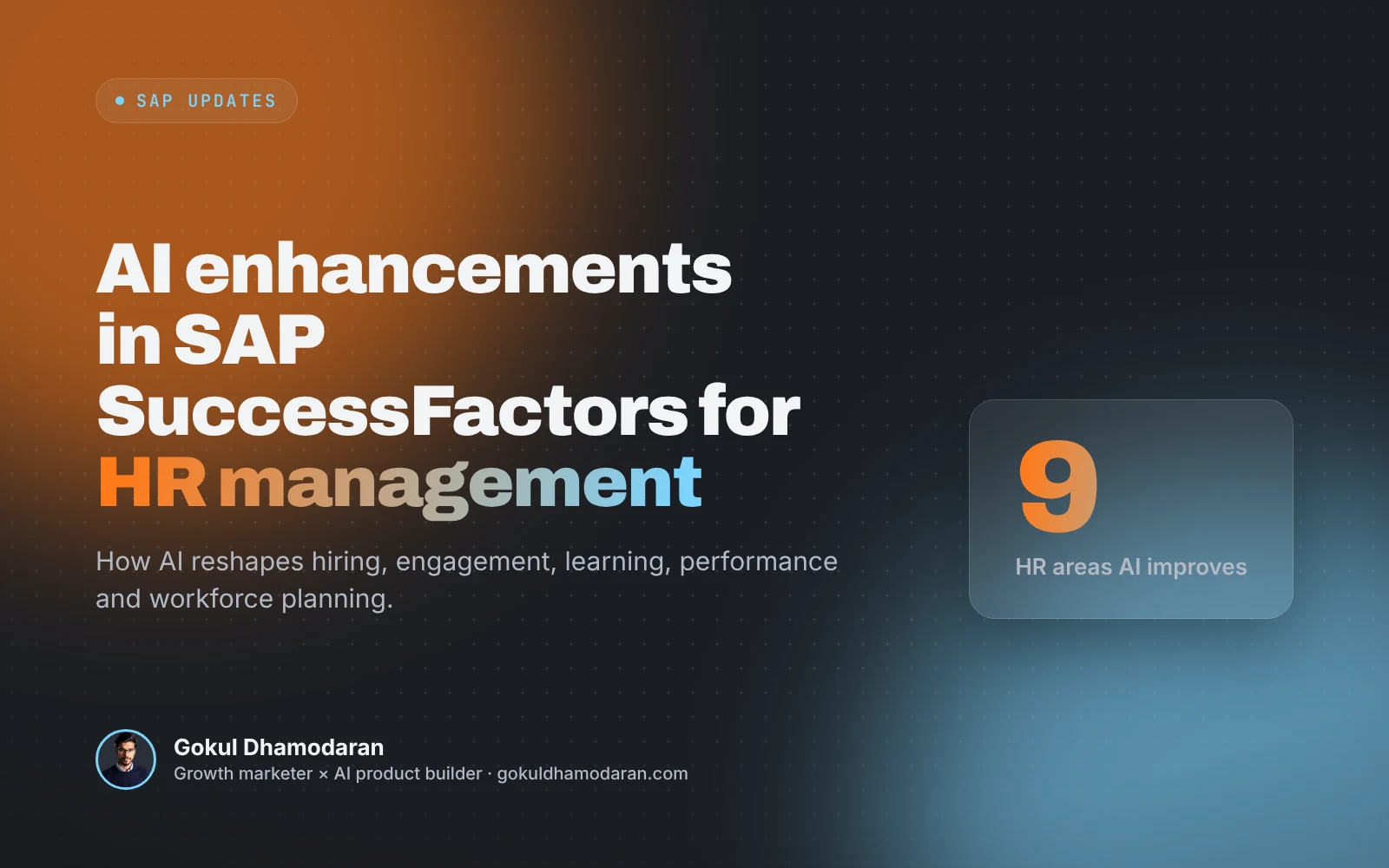
SAP SuccessFactors is an advanced HCM platform designed to help organizations manage their workforce more effectively. By integrating AI, SuccessFactors provides intelligent solutions that automate routine tasks, offer deep insights, and enhance decision-making. These AI capabilities enable HR professionals to focus on strategic activities, leading to a more engaged and productive workforce.
AI-Driven Talent Acquisition
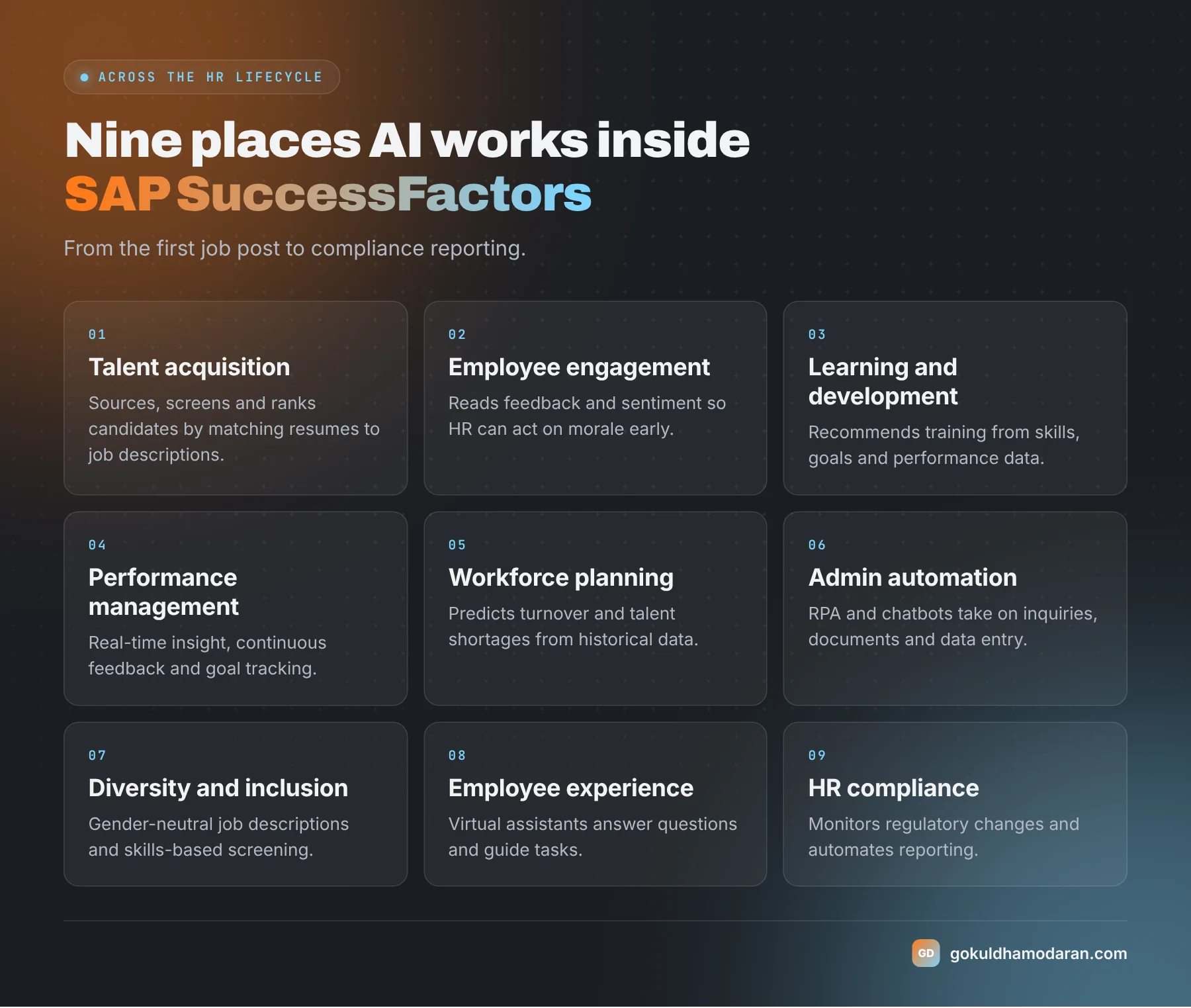
Talent acquisition is a crucial HR function, and AI significantly enhances this process. AI-powered recruitment tools in SuccessFactors streamline candidate sourcing, screening, and selection. Machine learning algorithms analyze vast amounts of candidate data, match job descriptions with resumes, and rank applicants based on their suitability. This speeds up the hiring process and improves the quality of hires.
Enhancing Employee Engagement with AI
Employee engagement is essential for retaining top talent and fostering a positive workplace culture. AI in SuccessFactors helps monitor and improve engagement by analyzing employee feedback, sentiment, and behavior. AI-driven surveys and analytics provide insights into employee morale, enabling HR to take proactive measures to address concerns. Personalized recommendations and tailored development plans also contribute to higher engagement levels.
AI-Optimized Learning and Development
Continuous learning and development are vital for employee growth and organizational success. AI in SuccessFactors optimizes learning paths by recommending personalized training programs based on individual skills, career goals, and performance data. AI-driven learning platforms identify skill gaps and suggest relevant courses, ensuring employees stay current with industry trends and advancements.
Performance Management and AI Insights
Effective performance management is crucial for organizational success. AI enhancements in SuccessFactors provide real-time insights into employee performance, enabling HR to make data-driven decisions. AI-powered performance reviews, continuous feedback, and goal-setting tools help managers track progress, recognize achievements, and identify areas for improvement. This leads to more accurate performance assessments and better employee development.
Predictive Analytics for Workforce Planning
Workforce planning involves anticipating future staffing needs and making informed decisions about talent management. AI in SuccessFactors leverages predictive analytics to forecast workforce trends, such as turnover rates and talent shortages. By analyzing historical data and current workforce dynamics, AI helps HR develop strategies to address potential challenges, ensuring the organization is well-prepared for the future.
Automating HR Administrative Tasks
HR departments often handle a plethora of administrative tasks, such as payroll processing, benefits administration, and compliance reporting. AI in SuccessFactors automates these routine activities, reducing the administrative burden on HR professionals. Robotic process automation (RPA) and AI-powered chatbots handle inquiries, document management, and data entry, allowing HR to focus on more strategic initiatives.
Improving Diversity and Inclusion with AI
Diversity and inclusion are crucial for fostering a dynamic and innovative workplace. AI in SuccessFactors promotes diversity by removing biases from recruitment and performance evaluation processes. AI algorithms ensure job descriptions are gender-neutral, screen candidates based on skills and experience rather than demographic factors, and provide insights into diversity metrics. This helps create a more inclusive and equitable work environment.
AI-Enhanced Employee Experience
A positive employee experience is key to attracting and retaining talent. AI in SuccessFactors enhances the employee experience by providing personalized and intuitive interfaces. AI-driven virtual assistants offer support and guidance, answering queries and assisting with tasks. Additionally, AI analyzes employee journey data to identify pain points and recommend improvements, ensuring a seamless and satisfying experience for employees.
Leveraging AI for HR Compliance
Compliance with labor laws and regulations is a critical aspect of HR management. AI in SuccessFactors helps ensure compliance by monitoring changes in regulations, analyzing compliance risks, and automating reporting processes. AI tools provide alerts and recommendations for corrective actions, minimizing the risk of non-compliance and associated penalties.
Challenges and Solutions in Implementing AI in HR
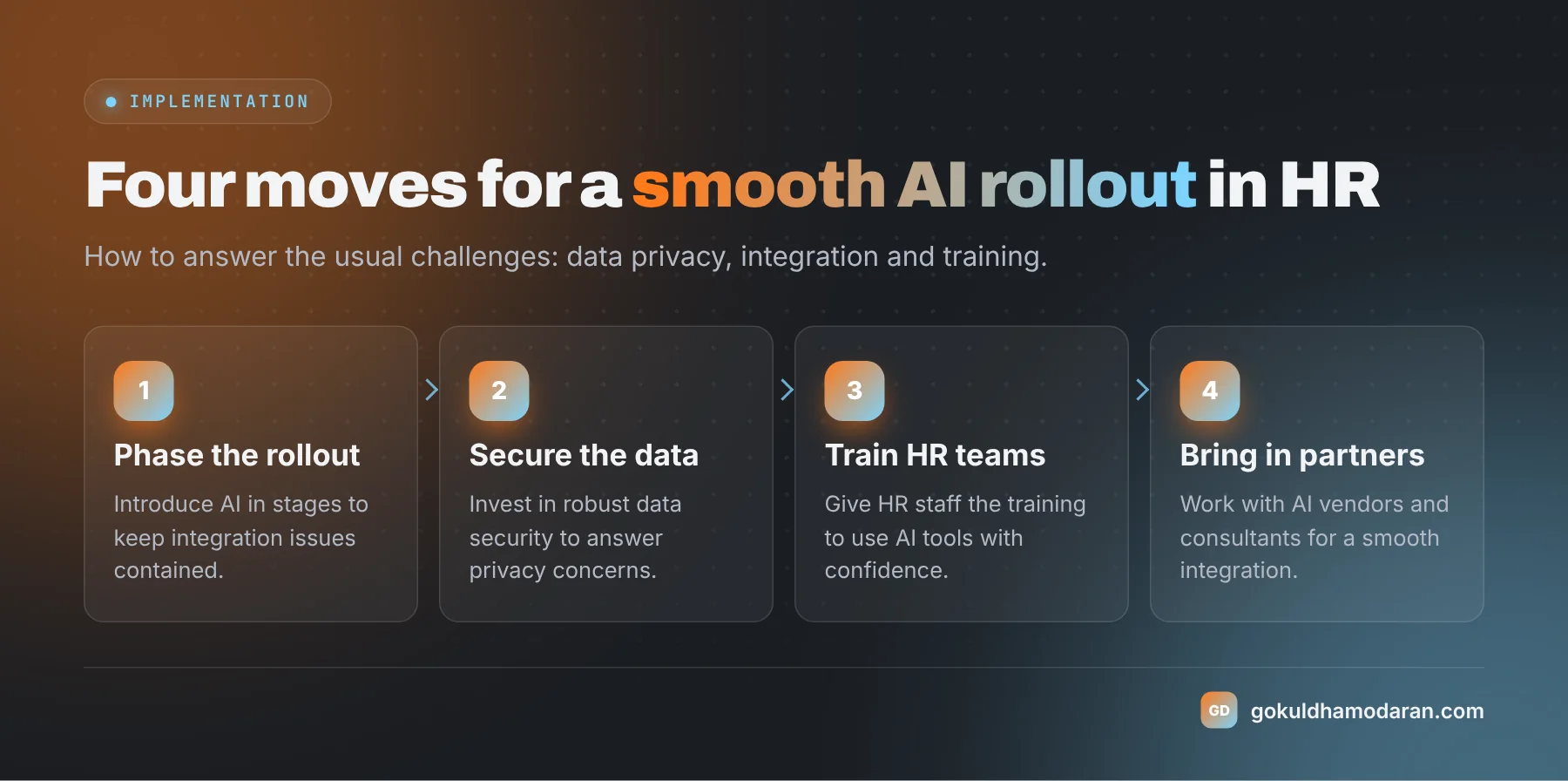
While the benefits of AI are significant, implementing AI in HR can pose challenges. These may include data privacy concerns, integration issues, and the need for employee training. Organizations should adopt a phased implementation approach, invest in robust data security measures, and provide training to HR staff to address these challenges. Collaboration with AI vendors and consultants can also ensure a smooth and successful integration.
Future Trends in AI and HR Management
The future of AI in HR management is promising, with continuous advancements expected in AI technologies. Emerging trends include greater use of natural language processing (NLP) for better communication, enhanced predictive analytics for proactive workforce management, and more sophisticated AI-driven learning platforms. As AI continues to evolve, it will further transform HR processes, making them more efficient, strategic, and employee-centric.
Conclusion
AI enhancements in SAP SuccessFactors are revolutionizing HR management by automating tasks, providing deep insights, and enhancing decision-making. These advancements lead to more efficient processes, higher employee engagement, and better overall organizational performance. As AI technologies continue to evolve, their integration into HR management will become increasingly essential for organizations aiming to stay competitive and innovative.
FAQs
How does AI improve talent acquisition in SAP SuccessFactors?
AI enhances talent acquisition by streamlining candidate sourcing, screening, and selection processes, leading to faster and higher-quality hires.
Can AI in SuccessFactors boost employee engagement?
Yes, AI can analyze employee feedback and behavior, providing insights that help HR improve engagement through personalized recommendations and development plans.
What role does AI play in learning and development?
AI optimizes learning paths by recommending personalized training programs based on individual skills, career goals, and performance data.
How does AI contribute to better performance management?
AI provides real-time insights into employee performance, enabling data-driven decisions and more accurate performance assessments.
What are the benefits of AI-driven predictive analytics in workforce planning?
Predictive analytics forecast workforce trends and develop strategies to address potential challenges, ensuring effective workforce planning.
How can AI improve HR compliance?
AI ensures compliance by monitoring regulatory changes, analyzing compliance risks, and automating reporting processes.

Gokul Dhamodaran
I turn what is happening at the AI frontier into what it means for enterprise systems, and I build AI products myself (Euliv Analytics, Vantage). I write Leading Indicator every Friday: the AI and enterprise tech moves that matter, and what they mean for you.
Views are my own and do not represent any employer or client. Graphics are original; sources are linked.